
The Ultimate Guide to Custom "Refractor" Sports Cards: How to Master Cold Foil Printing
Want the "Panini Refractor" look for your custom sports cards? Learn how to use Cold Foil printing to create professional, holographic "Chase Cards" with a 500 MOQ. Stop using cheap hot foil and start building your brand with VNK’s guide.
BLOG
3/10/20265 min read
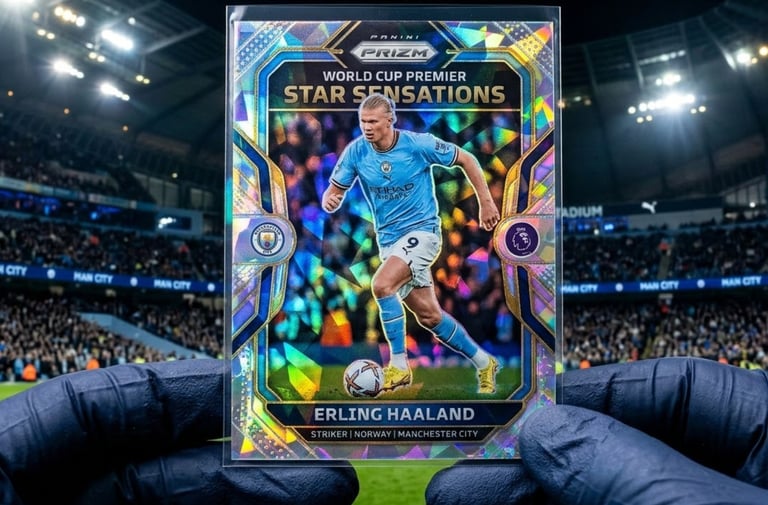
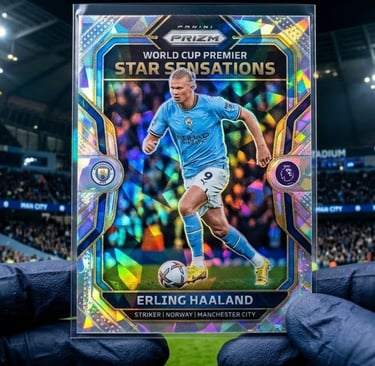
If you’ve ever pulled a rare Panini Prizm or Topps Chrome from a fresh pack, you know that unmistakable spark. The card catches the light, the stadium background shimmers with a prismatic gradient, yet the athlete remains crisp, clear, and perfectly matte.
It feels premium. It feels like a true "Chase Card."
However, for many indie creators and boutique brands, the first prototype is often a disappointment. You send your brilliant artwork to a standard print shop, only to receive a card with a thick, blindingly reflective metallic "sticker" stamped over your design. The foil obscures your linework, flattens the player’s features, and makes the entire project look like a cheap arcade prize.
If you want to print custom refractor trading cards that command high prices on the secondary market and captivate your collectors, you have to move beyond standard hot foil.
Here is the industry secret behind how major sports brands achieve that ultra-rare "refractor" finish—and how you can replicate that exact luxury feel at VNK.
🔍 The Quick Answer: What is a "Refractor" Finish?
To achieve the authentic "refractor" look, you must utilize Cold Foil Printing.
Unlike traditional hot stamping (which acts like an opaque metallic sticker), Cold Foil applies a metallic silver layer beneath translucent CMYK inks. This allows the colors of the jersey or background to shine with an integrated holographic glow, while keeping specific areas—like skin tones—matte and realistic.
The "Sticker" Pitfall: Hot Foil vs. Cold Foil
To understand why your last batch of cards might have missed the mark, you need to understand the physics of the press.
Most local print-on-demand shops only offer Hot Stamping. Think of this like a heated branding iron pressing a layer of opaque foil onto your card. While it’s fantastic for a shiny gold border, it is the enemy of detailed illustration. Because it is 100% opaque, it obliterates any art underneath it.
Cold Foil changes the physics of the card. At VNK, we lay down the metallic holographic layer first, then run your full-color CMYK artwork directly over it. Because professional printing inks are naturally translucent, the metallic soul of the card shines through your ink:
Yellow ink over Cold Foil becomes a brilliant Metallic Gold.
Red ink over Cold Foil transforms into a glowing Metallic Crimson.
This is how the legendary "refractor" effect is born. The foil becomes a fundamental part of the artwork, not an obstruction to it.
Anatomy of a "Chase Card": 3 Rules for Premium Quality
Whether you are launching an original sports IP or producing high-end proxies, a premium card follows three strict manufacturing rules:
1. The Base: German Black Core (The Flashlight Test)
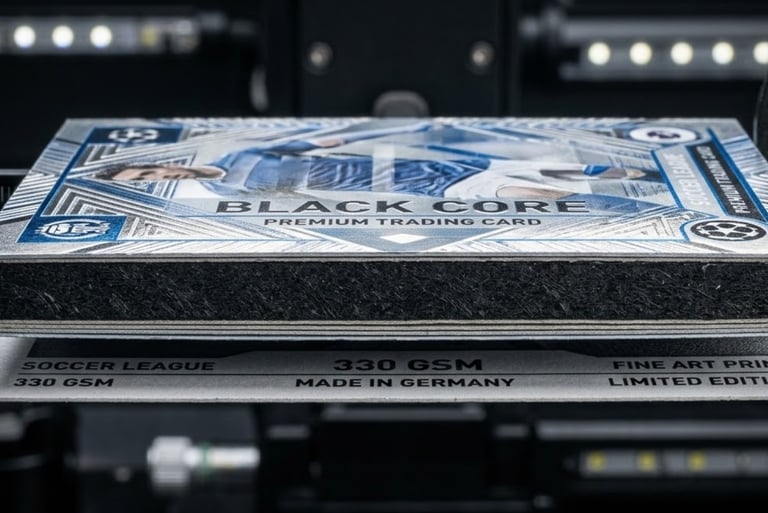
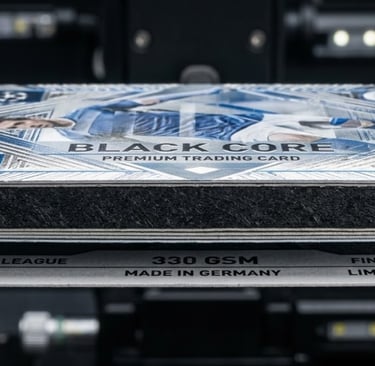
You cannot build a masterpiece on a mediocre canvas. Cold foil requires an incredibly smooth, professional surface. At VNK, we standardize our sports cards on 310gsm or 330gsm German Black Core.
The Test: If a collector shines a light against the card, zero light passes through.
The Result: That legendary "snap" when handled and superior edge protection during PSA/BGS grading.
2. The Foil Mask (The K=100 Rule)
How do you make the stadium lights shine but keep the basketball matte? In your design file, you create a "Mask Layer." By defining metallic areas in solid black (K=100) and non-metallic areas in white, our pre-press machines apply the Cold Foil with surgical precision.
3. The CMYK Overprint
We run the cards through our Heidelberg Offset presses, laying your full-color art perfectly over the foil mask. This creates the depth and dimension that defines the modern "Chrome" look.
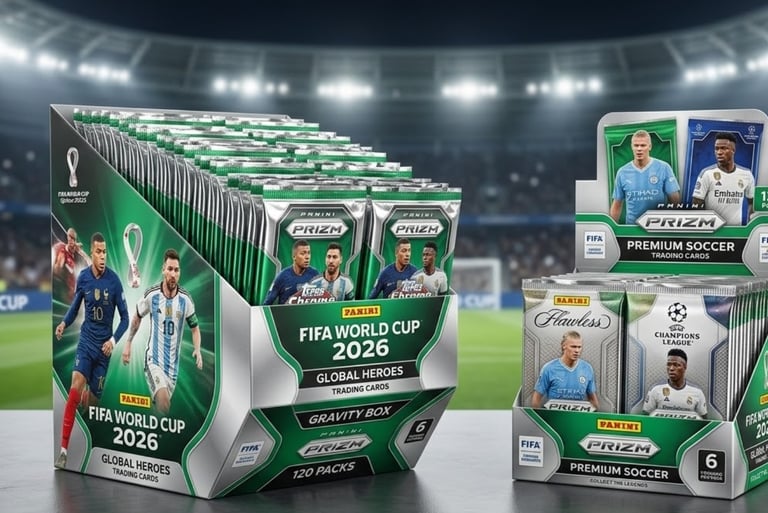
The Full Collector Experience: Booster Packs & Gravity Boxes
Half the thrill of sports cards is the "rip." If you simply hand someone a deck of loose cards, you are robbing them of the collector's experience.
VNK operates as a comprehensive booster pack manufacturer. We handle the entire ecosystem in one facility:
Print your Cold Foil rares and base sets.
Collate them based on your specific "pull rates" (e.g., 1 rare per 10 packs).
Seal them in custom-printed foil flow-packs.
Assemble them into retail-ready Gravity Display Boxes.
Unlocking Professional Quality: The 500 MOQ Advantage
Historically, Cold Foil technology was locked behind massive corporate paywalls, requiring minimum orders of 10,000+ packs.
VNK has changed the math. By optimizing our offset workflows, we have lowered the barrier for holographic sports card printing to a 500 MOQ. At 500 units, our automated Heidelberg presses drop your cost-per-unit to wholesale levels. This gives you the margins needed to fulfill a crowdfunding campaign or send promotional packs to "breakers" on YouTube and Whatnot.
Ready to Print Your Rookie Cards?
Don't let bad printing ruin great art. Figuring out cold foil masks for the first time can be intimidating—but you don't have to do it alone.
Send us a sample of your artwork. Our VNK pre-press engineering team will review your layers, give you actionable advice on how to make your refractor effect "pop," and provide a custom quote. No commitment—just expert advice from people who love great cards.
FAQ
Q1: What is the difference between "Refractor" and "Cold Foil"?
A: "Refractor" is a marketing term popularized by brands like Topps to describe a specific holographic, light-refracting finish. Technically, this effect is achieved through Cold Foil printing. Unlike hot foil, cold foil allows for a multi-color, shifting gradient (the rainbow effect) by printing translucent inks over a metallic base.
Q2: Can I make only certain parts of the card holographic?
A: Absolutely. By using a Foil Mask layer (K=100) in your design file, you control exactly where the foil is applied. You can make the background shimmer while keeping the athlete, text, and logos matte for a high-end, professional contrast.
Q3: Does cold foil affect the grading of the card (PSA/BGS)?
A: No, cold foil is a standard industry printing process. In fact, because cold foil is thinner and more integrated into the card than bulky hot stamping, it often results in a flatter, more consistent surface which is beneficial during the surface-grading process.
Q4: Why is the 500 MOQ (Minimum Order Quantity) important?
A: Cold foil requires a Heidelberg Offset Press, a massive industrial machine that takes hours to calibrate for a single run. A 500-unit run is the "sweet spot" where the setup costs are distributed enough to make the price-per-card affordable for indie creators while maintaining retail-grade quality.
Q5: What file format do I need to provide for a Cold Foil project?
A: We recommend high-resolution (300DPI+) Adobe Illustrator (AI) or Photoshop (PSD) files. Your project should include a standard CMYK layer for the artwork and a separate "Foil Mask" layer to indicate the holographic areas.
Add: Dongci Industrial estate, Shijie Town, Dongguan City, Guangdong Province, China 52300
Copyright 2025 © Dongguan VNK Playing Card Co., Ltd. All Rights Reserved.
CONTACT US
Email: info@vnkplayingcard.com
PRODUCTS
QUICK LINKS